Wednesday, March 4, 2026

University of North Texas | Semiconductor Manufacturing MS Degree | CMEE
DENTON (UNT), Texas — The University of North Texas is preparing its first cohort of students to graduate from a new, accelerated master’s degree in semiconductor manufacturing engineering through the Center for Microelectronics in Extreme Environments (CMEE).
Founded in 2024, CMEE launched the one-year Master of Science program through the College of Engineering in fall 2025 to train students for immediate entry into the semiconductor manufacturing workforce. The interdisplinary program includes students from physics, chemistry, materials science and engineering, and mechanical engineering.
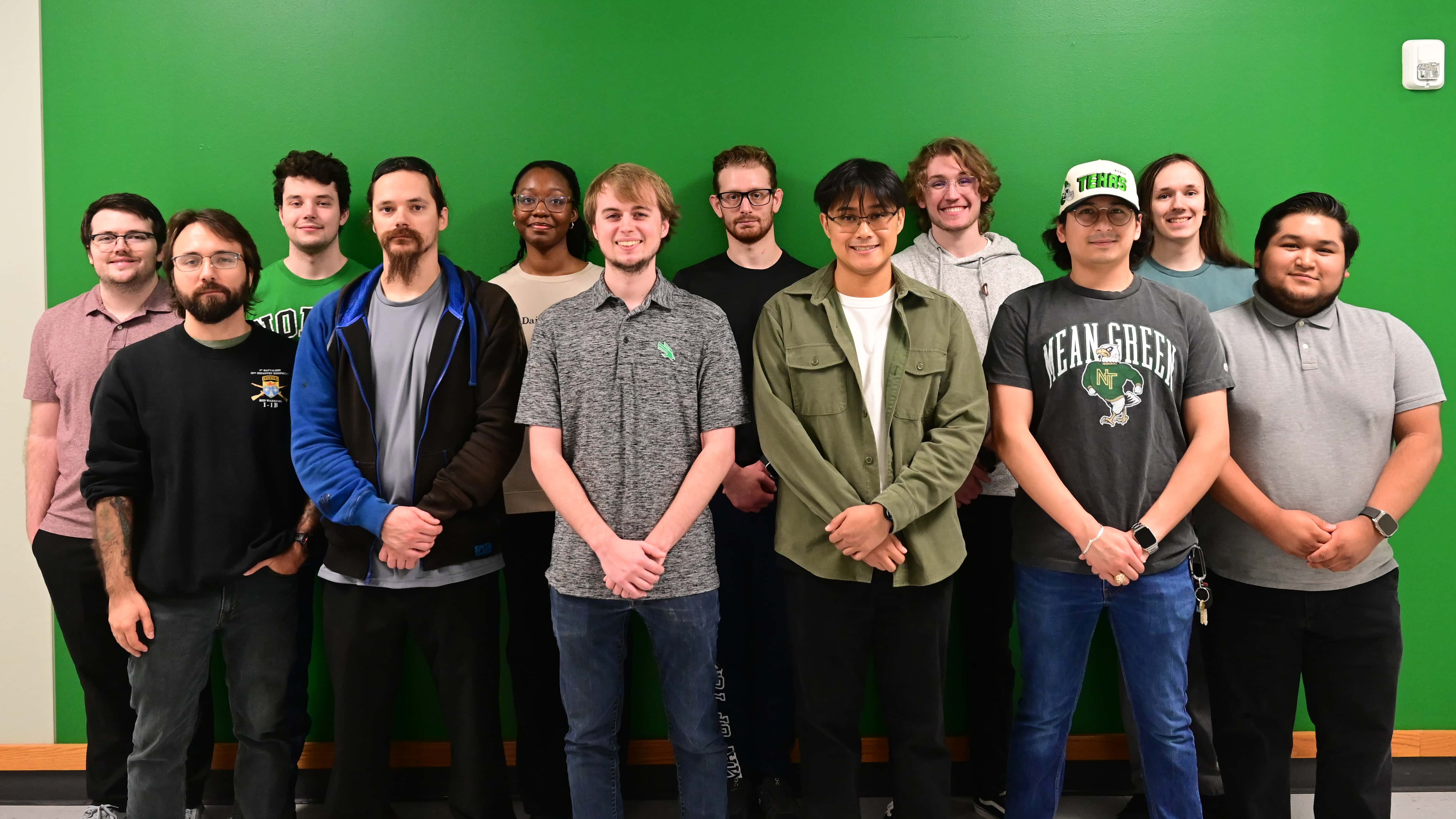
UNT's first cohort is made up of 12 students from multiple academic disciplines.
“The new Master of Science in semiconductor manufacturing engineering is designed to keep students at the cutting edge of this continually advancing field with both technical knowledge and practical skills,” said Paul Krueger, dean of the College of Engineering. “We are excited for our first group of students in this program and look forward to preparing them for careers in the semiconductor industry.”
The inaugural cohort includes 12 students from multiple academic disciplines. The program is supported by scholarships from the Defense Advanced Research Projects Agency and Texas Institute of Electronics Next-Generation Microelectronics Manufacturing program.
CMEE connects faculty and students from the College of Engineering and the College of Science to develop next-generation electronic materials capable of operating in extreme temperatures, pressures and environments such as space or hypersonic conditions.
“This work is inherently multidisciplinary,” said Usha Philipose, co-director of CMEE and professor of physics. “The industry isn’t separated into silos. It takes engineers, physicists, chemists and computer scientists working together. UNT’s integration of all these disciplines from day one is truly impressive.”
As part of the program, students complete semiconductor-focused research projects while working in mixed-discpline teams designed to mirror industry environments.
Jeffery Hemperley, a student in the cohort, conducts research on advanced semiconductor materials in Philipose’s lab. His work focuses on gallium oxide, a material used in ultra-wide-bandgap semiconductors that can operate at higher voltages and power levels than traditional silicon-based devices.
“There are three of us working on different stages of the same process,” Hemperley said. “That collaboration helps improve the quality of the material and move the research forward.”
While physics students focus on developing the semiconductor’s base materials, engineering students study insulating layers that help control and protect the devices. Gerardo Gamboa, a materials science and engineering student, researches advanced insulating materials used in transistors to improve performance and enable smaller, more efficient devices.
“This work gives you a better understanding of how the technology we use every day actually functions,” Gamboa said.
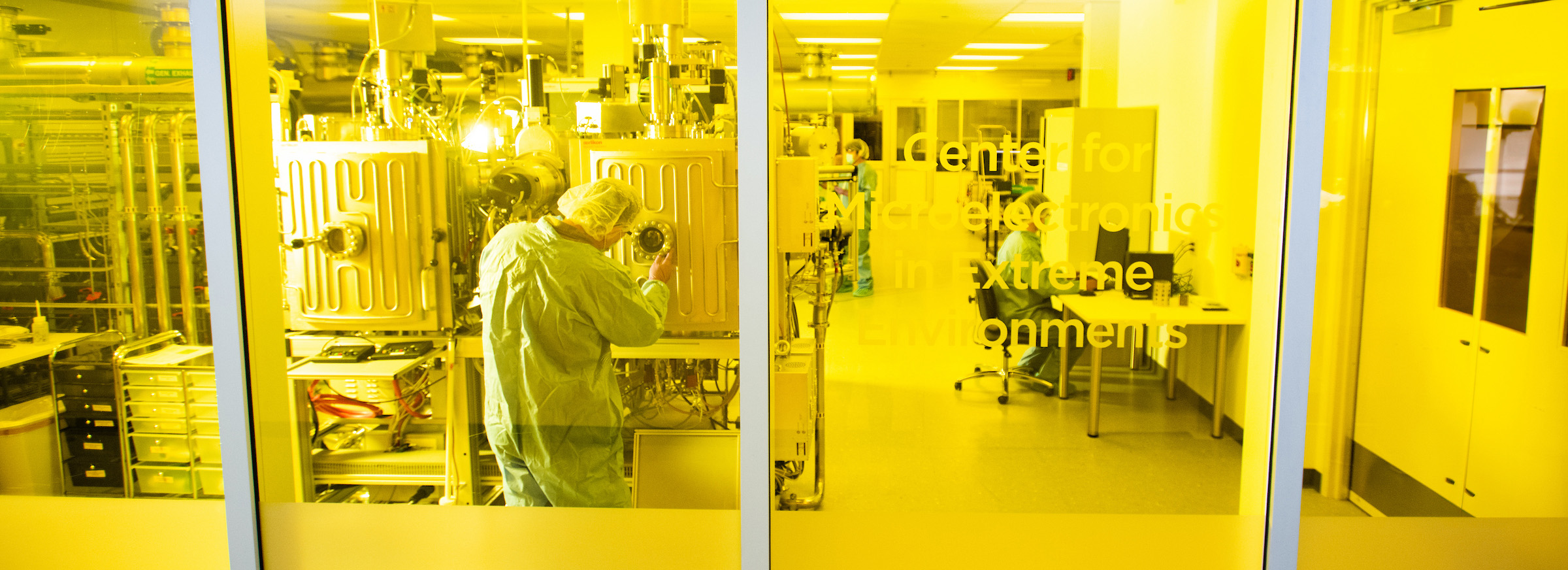
At UNT's Discovery Park, a researcher works inside the UNT Center for Microelectronics in Extreme Environments semiconductor laboratory
Students say one of the program’s most beneficial aspect is learning how to collaborate across disciplines. Cohort members meet once per week to exchange information on their projects and learn more about each person’s role in the semiconductor manufacturing process.
“It’s not just one field that makes these devices possible,” Gamboa said. “It’s all these different engineers and scientists coming together. I’m learning more about the process, and I’ve made some good friends as well.”
Students are mentored by CMEE faculty throughout their research. The first cohort is set to graduate in spring 2026. Hemperley plans to continue his studies at the doctoral level, while Gamboa plans to enter the semiconductor industry after graduation. He believes the hands-on experience from the program will give all the students in the cohort a leg up when applying.
“We’re getting familiar with the procedures and the amount of trial and error that goes into making a device work,” Gamboa said. “We’re also learning more about connecting across disciplines and building a community, and that’s how it should be.”
From UNT News – Research