Monday, March 2, 2026

DENTON (UNT), Texas — A newly-funded project will provide students at the University of North Texas with professional certifications and hands-on experience operating industry-grade drone systems.
Created by Pinliang Dong, John South, and Lisa Nagaoka, faculty members in UNT’s Department of Geography and the Environment, the Drone Mapping Project was awarded $80,000 from the Diamond Eagles Excellence Fund. The fund is endowed by the UNT Diamond Eagles Society, a giving initiative within the Division of University Advancement that supports impactful projects created by and for the UNT community.
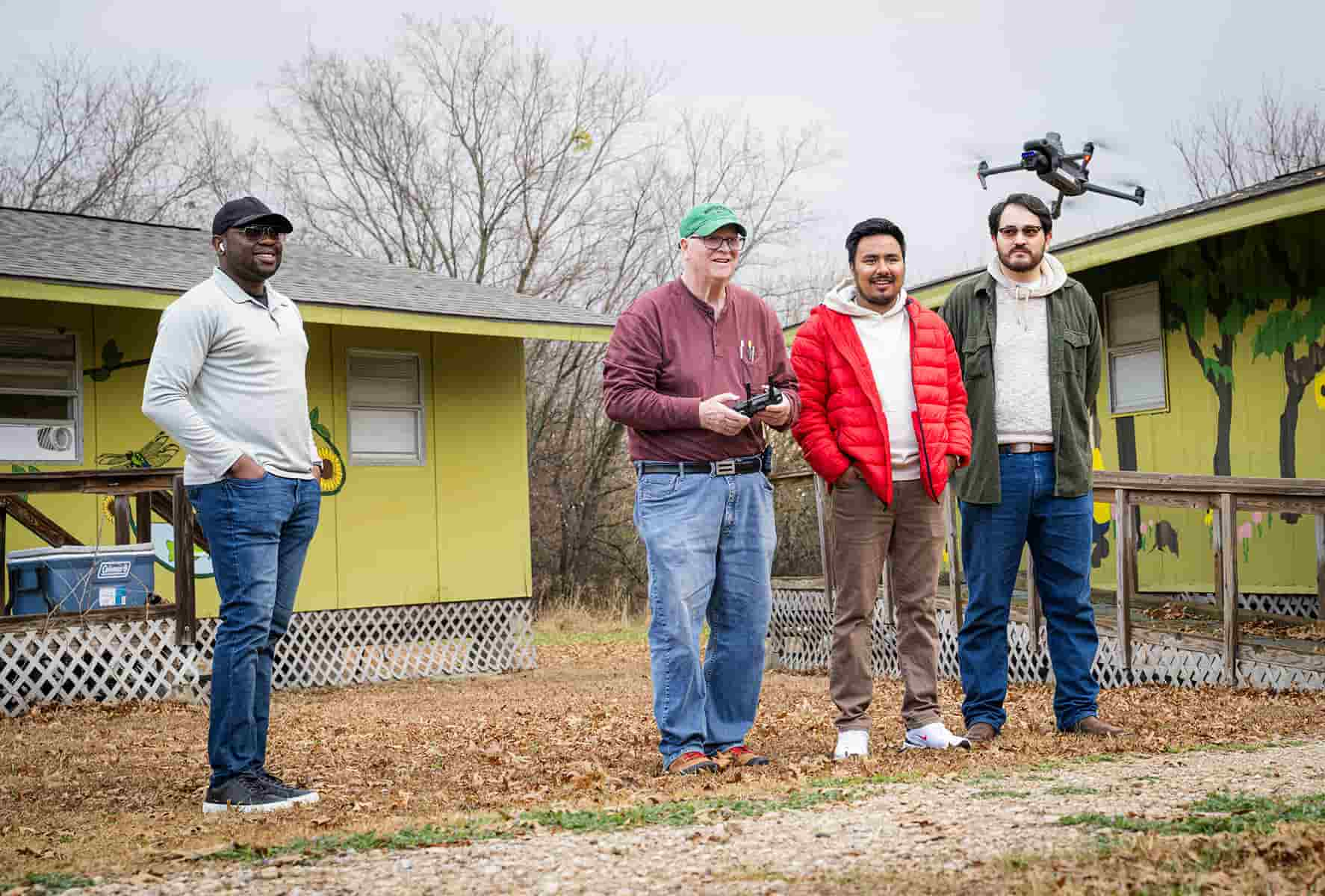
From left: UNT's PhD candidate Mawulikplim "Joshua" Kafui, UNT Geography & the Environment lecturer John South, Aerial Remote Sensing Club president Jenish Chauhan, and Aerial Remote Sensing Club vice president Jesse Reyna
The funding will support the acquisition of an advanced drone system for the Aerial Remote Sensing Club and help cover costs for students pursuing remote pilot certification from the Federal Aviation Administration, which is required to operate drones for commercial purposes in the United States.
Dong, professor of geography and department chair, said the demand for professional drone pilots is growing across industries.
“In a recent search, we found more than 2,000 drone-related job openings in Texas alone,” Dong said. “Private companies and government agencies are seeking pilots who also have data collection and processing skills.”
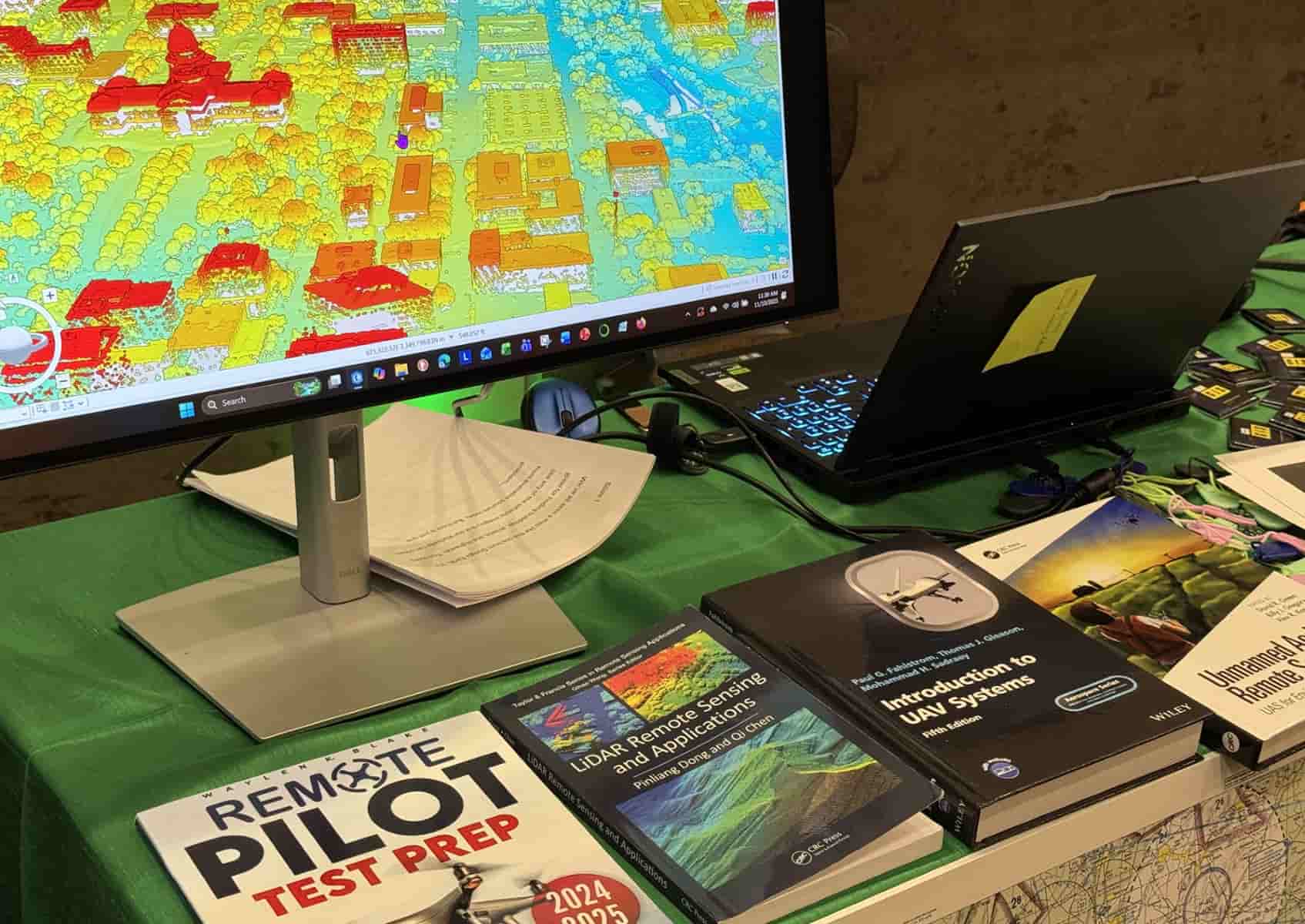
3D laser scanned Lidar imagery of the Texas Capitol and books on drones and lidar technology
To help students build these skills, the project will purchase a drone system equipped with advanced imaging technology. A hyperspectral sensor capable of detecting hundreds of channels of light allows students to analyze vegetation, soil and land conditions in detail. The system will also feature light detection and ranging, or lidar, technology, which uses a laser to create three-dimensional views of the Earth’s surface. Together, the tools allow students to create highly detailed images, maps and three-dimensional replicas of the landscape.
South — a geography lecturer, faculty advisor for the Aerial Remote Sensing Club and FAA-certified remote pilot — said these tools will give students experience that is often difficult to gain outside industries that combine drone technology with geographic information systems, or GIS.
“Drones with these capabilities allow our students to conduct much more detailed research,” South said. “They can fly over an area to identify and monitor plant species or analyze soil to determine mineral composition. We’ll be able to teach them how to plan missions, collect high-quality data and produce a wide range of outputs — from maps to terrain models to three-dimensional imagery and surveys.”
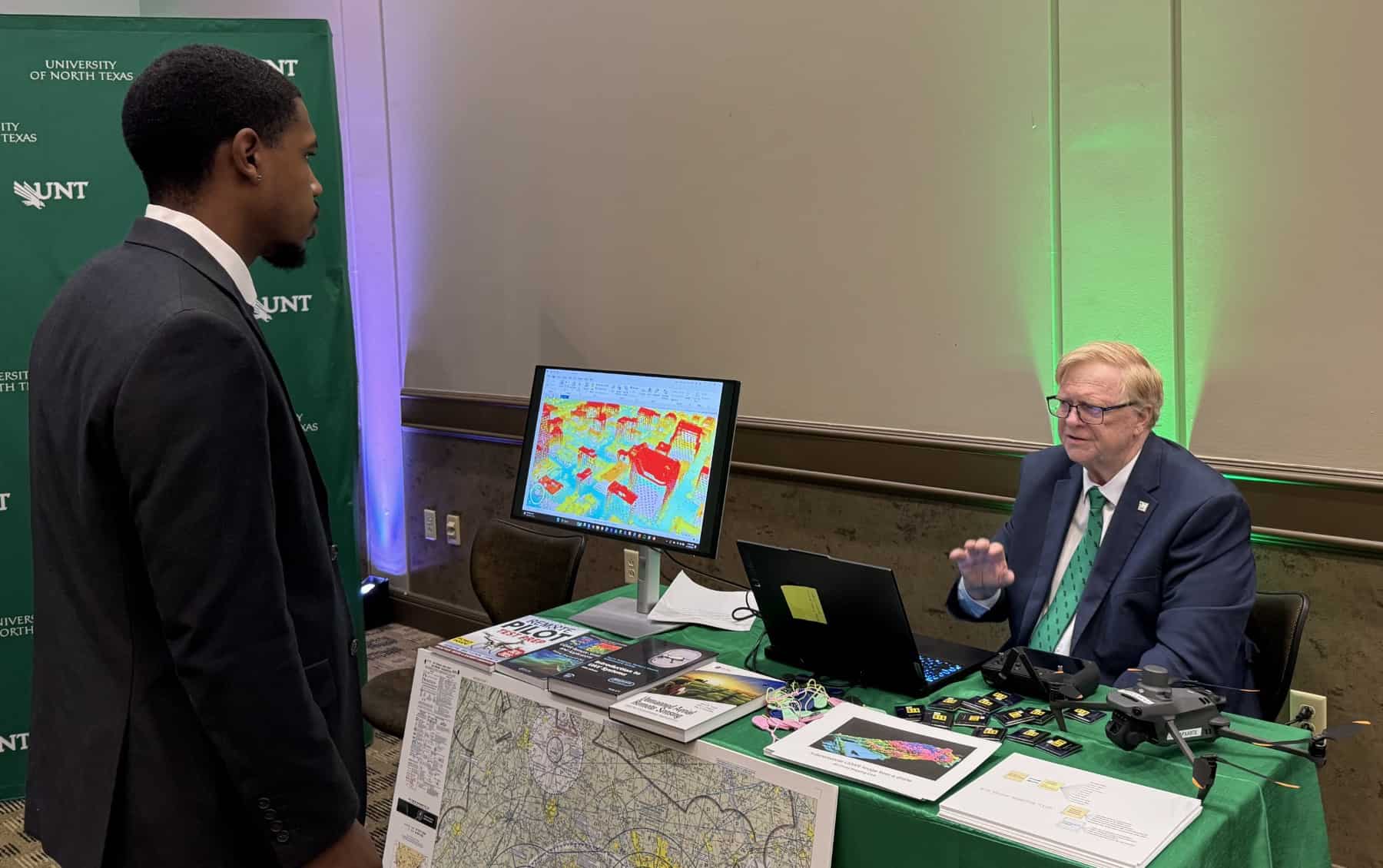
UNT Geography & the Environment lecturer John South providing information on drones
Aerial Remote Sensing Club vice president Jesse Reyna, a master’s student in geography, said learning to operate commercial-grade equipment and software is a valuable opportunity for students working to become drone pilots.
“We’ve been fortunate to get experience using the drones Professor South shares with the club,” Reyna said. “But getting experience with a new system — with the type of drone we’ll be using in our future careers — that’s really exciting.”
Club president Jenish Chauhan, a master’s student in geography pursuing a concentration in data analytics, shared Reyna’s excitement and said the project will give students access to current data critical for study.
“For my master’s thesis, I’ve been analyzing data from 2019,” Chauhan said. “Having a drone that belongs to the club will allow us to collect our own up-to-date data, which is very important to our research.”
The UNT Aerial Remote Sensing Club is open to all UNT students. To learn more or to join the club, email John.South@unt.edu.
From UNT News – Featured News