Monday, March 9, 2026
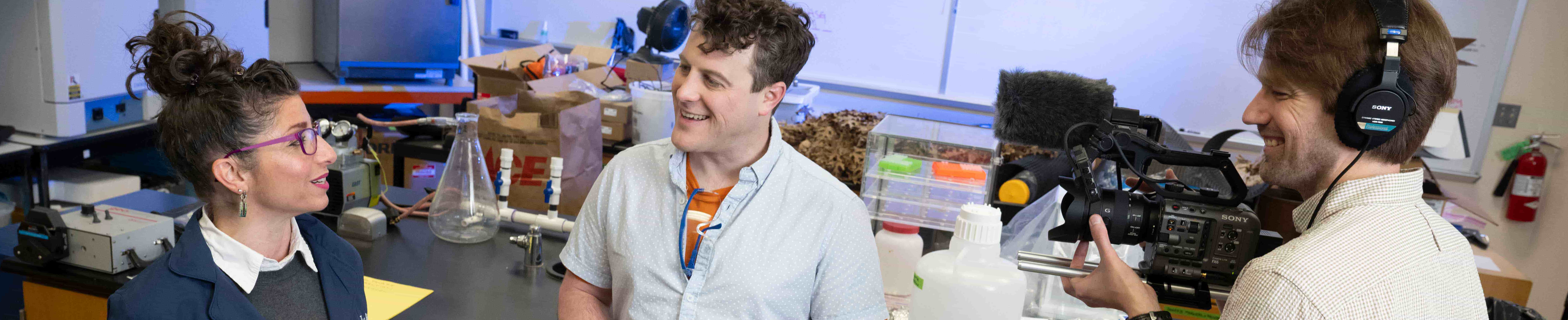
University of North Texas researchers study extremophiles to unlock secrets of life in space while filming the research to create outreach materials
DENTON (UNT), Texas — A $1 million dollar grant is allowing a University of North Texas research team and its partners to study how life survives in Earth’s harshest environments and how it could be sustained in space.
“The team members and I are already conducting a lot of research that measures signatures of life and microorganisms from Earth’s harshest ecosystems,” said Associate Professor Juliana D’Andrilli in the College of Science. “Now we can help create the roadmap on how they would survive in spaceflight or on other planetary bodies.”
D’Andrilli is the lead investigator on the seven-member team studying microorganisms called extremophiles, which thrive in harsh environments. The team aims to understand how extremophiles manage and optimize energy use and waste.
“The idea is to measure how much methane or carbon dioxide these microorganisms release as they’re trying to sustain life. Then, we’re going to model that energy transfer from energy in, through their metabolic processes, to energy out,” D’Andrilli said. “In spaceflight, we can’t allow molecules, waste products and atmospheric gasses to just leave a closed system.”
The Air Force Office of Scientific Research is funding the project as part of a larger initiative that explores bio-agile energy, metamaterials, electrochemistry and space architectures. D’Andrilli’s team will focus on bio-agile energy.
“We actually learned about this opportunity thanks to one of my long-time collaborators, Jim Junker, meeting the program officer while teaching a component of the UNT Sub-Antarctic Biocultural Conservation Program in Chile in 2025,” D’Andrilli said. “He knew that I’ve made a career out of this kind of research, and that I would be able to assemble a team quickly to lead the effort.”
The team will rotate visits to the Atacama Desert in Chile and the Pantanal hypersaline lakes in Brazil, exposing extremophiles to three additional stressors: light, water, and dissolved organic matter. Dissolved organic matter includes carbon-based molecules, such as amino acids or carbohydrates, and are routinely used by extremophiles in their metabolic processes to sustain life.
While some tests will be conducted in the field, samples also will be brought back to UNT labs for further study. Over time, the team will manipulate all three stressors simultaneously.
“For example, freshwater can be used as an additional stress for both types of samples since the hypersaline lake samples are very salty and the soils of the Atacama Desert are very dry. Gradually adding water changes the environment the microorganisms are used to,” D’Andrilli said. “Will those microorganisms adapt, show flexibility, or perish? If so, what energetic strategies are used to be ‘bio-agile?’ That’s what we’re investigating.”
The team includes Jim Junker, Research Assistant Professor in the College of Science; Brandon Gaesser, Assistant Professor in the College of Liberal Arts and Social Sciences (CLASS); Professor Steve Techtmann from The Ohio State University; Professor Amy Marcarelli from Michigan Technological University; Associate Professor Davi Gasparini Fernandes Cunha from Universidade de São Paulo and Associate Professor Marshall Bowles from the Dauphin Island Sea Lab.
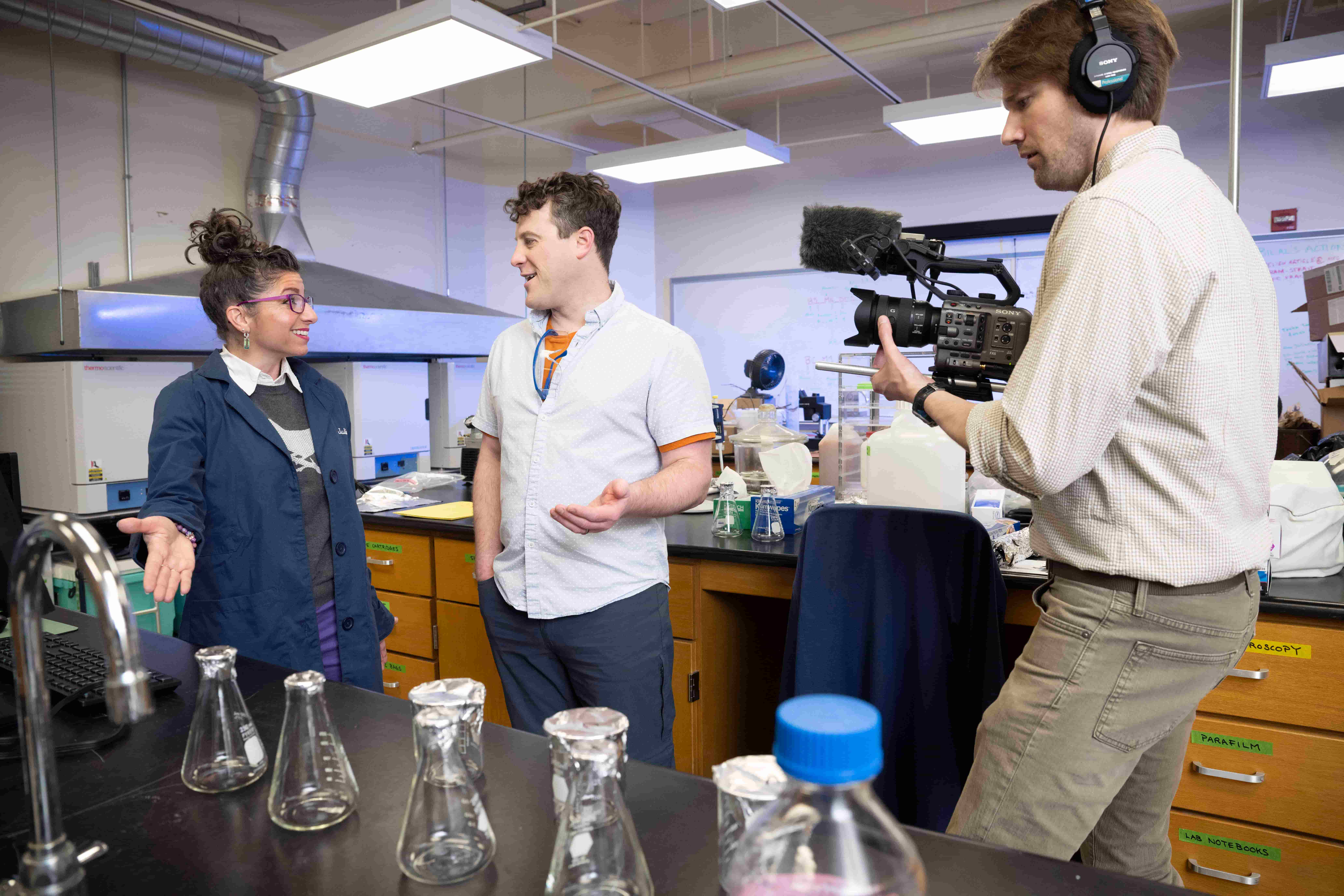
Gaesser will play a unique role, filming the research to create outreach materials.
“I want this to become an opportunity to broaden outreach and expand educational resources for increased public engagement,” Gaesser said. “Together, we’re turning science into storytelling.”
The team also plans to involve students and postdoctoral researchers. Some students will travel to field sites to collect specimens, while others will assist with lab experiments. D’Andrilli plans to hire a graduate student to focus on energetic modeling.
“We want to bring on someone who can really dig into the data and give us a glimpse into how these microorganisms respond to stressors they can’t even encounter in extreme environments on this planet,” D’Andrilli said.
Graduate students from CLASS may also assist Gaesser by filming lab experiments or producing animated infographics for the final film project.
UNT is serving as the lead institution, managing all subawards and contracts with partner institutions. The three-year project is already underway, with fieldwork planned for later this year.
“Our proposal was long and detailed, but we never lost our excitement for the project,” D’Andrilli said. “The mix of perspectives on our team is exactly what we need to tackle the big questions about life in extreme environments on Earth and beyond.”
From UNT News – Research