Thursday, February 12, 2026
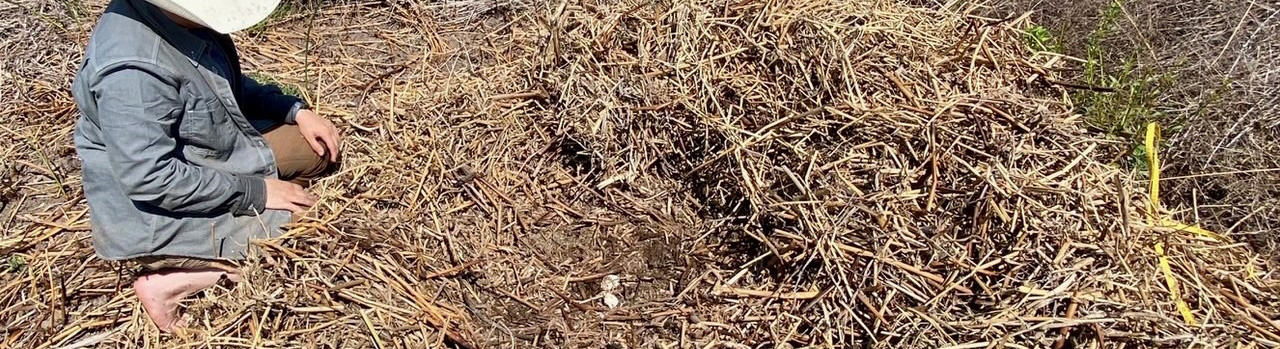
A partnership between the University of North Texas and the Fort Worth Nature Center and Refuge explores how urban alligators survive cold snaps and human pressures in Dallas-Fort Worth.
DENTON (UNT), Texas — American Alligators are among the world’s oldest species, remaining virtually unchanged for millions of years. While they’re often associated with the Louisiana bayou and Florida swamps, a population of alligators lives here within the Dallas-Fort Worth area — and researchers want to know what makes them different.
“This population is on the western fringe of the American alligator’s range, and they’re within an urban area,” said Dr. Jared Wood, manager at the Fort Worth Nature Center and Refuge. “But this group is persisting despite extreme environmental pressures such as freezing temperatures and proximity to human activity.”
Wood’s wildlife research team at the refuge is small, which is why he’s turned to the University of North Texas to learn more about the population. He’s working with biological sciences assistant professor Dr. Andrew Gregory in the College of Science, graduate student Cristal Martinez-Alvizo, and the members of UNT’s Wildlife Society student chapter.
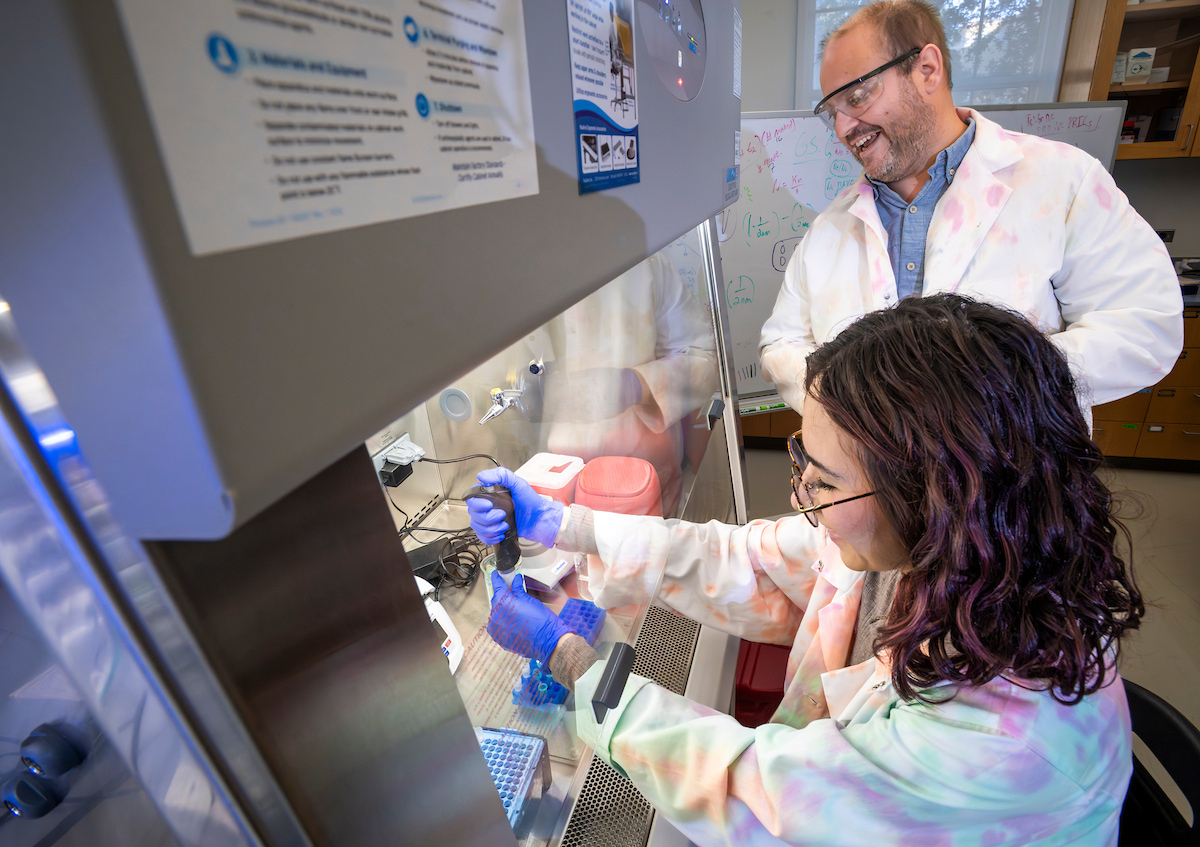
Graduate student Cristal Martinez-Alvizo will help assistant professor Andrew Gregory with studying the alligator genetic samples.
“Alligators were first reported in Fort Worth in 1849,” Gregory said. “But we still don’t know their exact numbers or what other populations they may be connected to which is what we want to figure out.”
Gregory will help refine survey methods used at the refuge, including spotlight sweeps.
“You use a spotlight to scan for alligator eyes because they reflect a reddish-orange color in the light,” Gregory said. “You spot a set of eyes and count one alligator. Then you turn and see another set. After multiple passes, you have to ask whether you counted several animals or the same one multiple times. We’ll teach statistical methods and designs that give greater confidence in the count.”
The team will also survey alligator nests. Wood and student volunteers will document as many nests as possible and collect data on daily temperature profiles, egg numbers, incubation periods, and hatch rates.
“This helps us understand what characteristics these alligators look for when building nests,” Gregory said. “Hatch success also gives us insight into population growth.”
Wood says the spotlight and nest surveys give members of the UNT Student Chapter of the Wildlife Society hands-on experience that prepares them for careers in wildlife conservation.
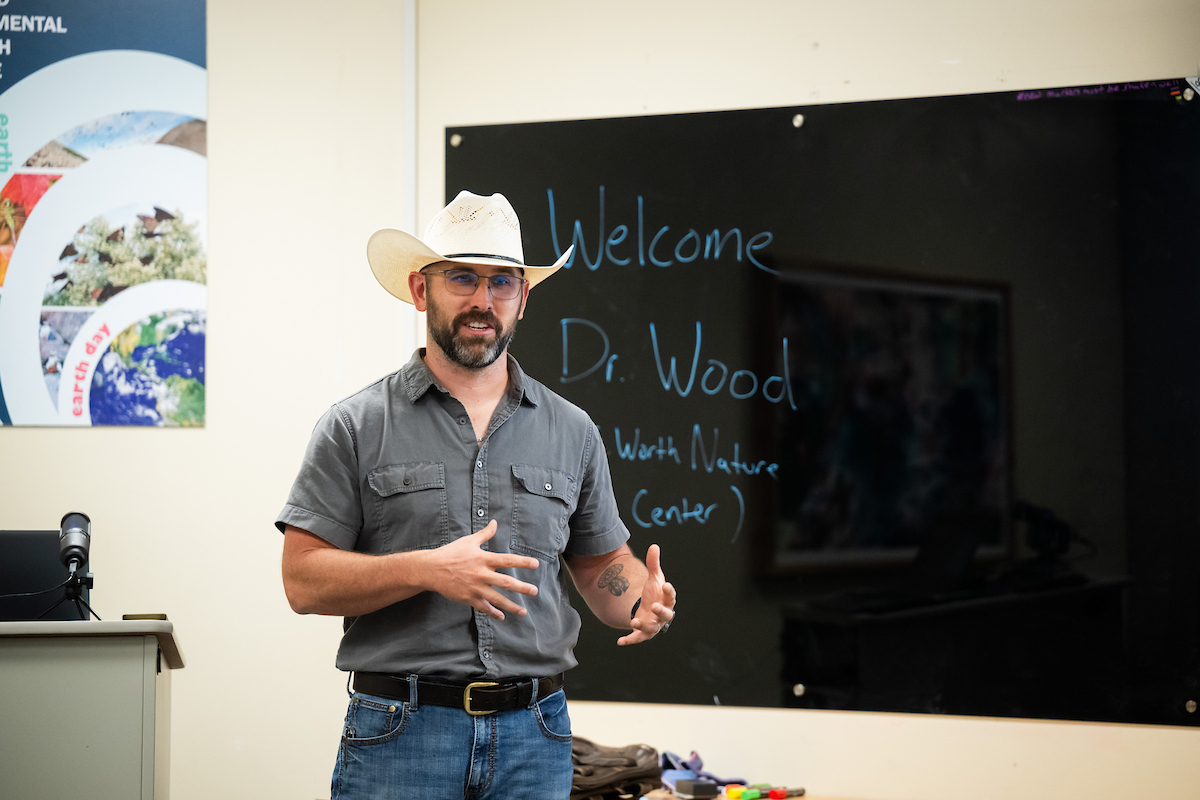
Jared Wood, manager at the Fort Worth Nature Center and Refuge, oversees the alligator surveys.
“Many students lack the hands-on skills required to become a competent field biologist,” Wood said. “The job market is competitive, so any field experience they obtain through this project will be beneficial.”
Martinez-Alvizo will assist with surveys and lead lab work once the eggs hatch. Teams will bring eggshells back to Gregory’s lab to study the genetic data of hatchlings and parent alligators. This will give them insight into the genetic diversity in the alligator population.
“I’m excited to work on this project, especially since alligators are usually portrayed in a negative light,” Martinez-Alvizo said. “It also shows that conservation work can happen in your own backyard.”
Wood hopes the research will highlight how alligators in the DFW area differ from other wild populations.
“A lot of the current literature is based on alligator populations in states like Florida and Louisiana,” Wood said. “There’s so much we don’t know, so any data will be a valuable contribution to understanding the biology of this unusual population.”
The project is funded by a grant from the Fort Worth Zoo. Wood says with the long-term goal is to have UNT’s Student Chapter of the Wildlife Society take the lead on the research.
“The project means so much to the public because we’re always being asked about the Refuge’s gators,” Wood said. “Every student who works on this will help advance conservation initiatives pertaining to this species while building their skills to become professionals in their chosen field.”
From UNT News – Research